How Long Does It Take To Build And Launch A Custom Web Application?
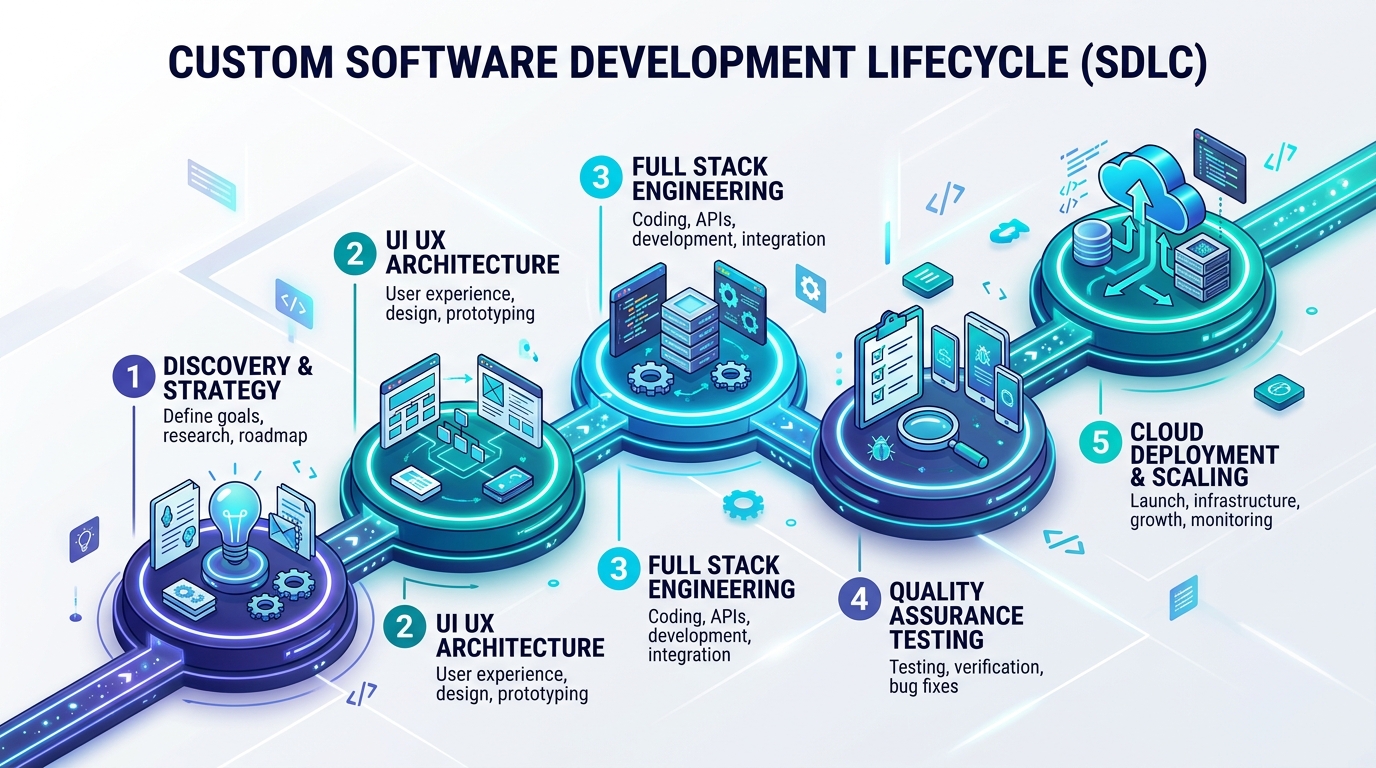
Deadlines do not fail at the end of a project; they fail on the very first day.
Most software launch delays are not caused by slow programmers typing code. They are caused by fuzzy product requirements, indecisive stakeholder approvals, and architectural pivots executed mid-sprint.
When planning a custom build, knowing your exact custom web application timeline allows you to orchestrate marketing campaigns, coordinate sales teams, and safeguard investor capital.
Here is the precise engineering timeline required to bring a custom application from conception to production.
The Executive TL;DR / Realistic Production Schedules
- Streamlined MVP (Minimum Viable Product): 6 to 10 Weeks (Focused core feature set, single user persona)
- Commercial Multi-Tenant Web Platform: 12 to 20 Weeks (Multi-tier roles, payment engine, API integrations)
- Complex Enterprise Cloud System: 24 to 36+ Weeks (Legacy data migration, high compliance, microservices)
- The Agile Law: According to the Agile Alliance , breaking builds into 2-week continuous delivery cycles reduces catastrophic schedule slippage by over 65%.
How Long Does It Really Take to Build a Custom Web App?
A custom web application takes between 8 to 24 weeks to design, architect, engineer, and deploy to production. Simple minimum viable products launch in 6 to 10 weeks, while feature-rich enterprise platforms with legacy integrations require 4 to 9 months of disciplined agile development sprints.
Speed is a function of scope discipline. A disciplined team building five well-defined core features will outpace an indecisive team building twenty vague features every single time.
Sprint Breakdown: Where the Weeks Are Spent
Let us walk through the physical anatomy of a 14-week commercial web application lifecycle.
Weeks 1–3: Architecture Discovery & Interactive Prototyping
Before code is written, solutions architects map database schemas, security roles, and user flow wireframes. Interactive Figma prototypes are tested to resolve UX confusion before engineers touch the keyboard. Explore our battle-tested development process to see how upfront planning protects project velocity.
Weeks 4–9: Core Backend Architecture & API Development
Engineers build the database layer in PostgreSQL, implement secure authentication pipelines, and establish REST endpoints. The frontend team translates Figma designs into blazing-fast responsive components. Check out our real-world customer builds on our work page.
Weeks 10–12: Third-Party Integrations & Edge Case Logic
Payment webhooks (Stripe/PayPal), CRM integrations, background queues, and automated transactional notification emails are integrated and stress-tested.
Weeks 13–14: QA Hardening, Load Testing & Production Deployment
Automated end-to-end regression tests run alongside penetration vulnerability audits compliant with OWASP Top 10 Standards . Server infrastructure is deployed with SSL certificates, automated backup systems, and CDN edge caching.
Timeline Comparison by Project Scope
| Project Classification | Estimated Duration | Target Deliverables & Milestones |
|---|---|---|
| Proof-of-Concept / Prototype | 4 – 6 Weeks | Clickable mockups, validation logic, basic single-database setup |
| Startup MVP | 8 – 10 Weeks | User onboarding, core value loop, Stripe checkout, clean admin UI |
| B2B SaaS Portal | 12 – 18 Weeks | Multi-tenant accounts, RBAC permissions, analytics dashboard, webhooks |
| Enterprise Portal System | 20 – 32+ Weeks | ERP sync, legacy database migration, SOC 2 compliance, disaster recovery |
How to Accelerate Your Launch Without Cutting Quality
To compress your launch window by 30%, implement these three principles:
- Lock the Scope of Milestone 1 in Concrete
Scope creep is the apex predator of deadlines. Every time a stakeholder says, "Wouldn't it be cool if it also did X?", your launch date moves back seven business days. Defer nice-to-have ideas to Version 1.1.
- Choose Modern, High-Velocity Tech Stacks
Avoid esoteric experimental languages. Standardizing on robust, proven ecosystems like PHP 8+, Laravel, React, and PostgreSQL delivers robust security libraries and pre-built components out of the box. Review our custom web application services to see our technology foundations.
- Implement Daily CI/CD Automated Pipelines
Never wait until the final week to assemble the puzzle. Continuous deployment ensures that tested code is committed and verified every single day on a staging environment.
The Non-Obvious Pitfall: The "More Developers" Fallacy
When an untrained manager notices a project running three weeks behind schedule, their instinct is to throw five more developers into the mix.
This triggers Brooks's Law from the seminal software engineering text The Mythical Man-Month: adding manpower to a late software project makes it later.
New engineers require onboarding, ask questions, and increase communication overhead exponentially. The solution to a tight deadline is never more cooks in the kitchen; it is ruthless reduction of non-essential ingredients.
Launch Your Application on Schedule
Do not leave your product launch to chance and wishful thinking. Take action today:
- Document your five core business rules in a single-page product brief.
- Book a technical discovery session with App Craft Services and receive an explicit sprint-by-sprint project schedule.
Precision engineering delivers predictable results.